
Mattress Thickness Guide – How Thick Should Your Mattress Be?
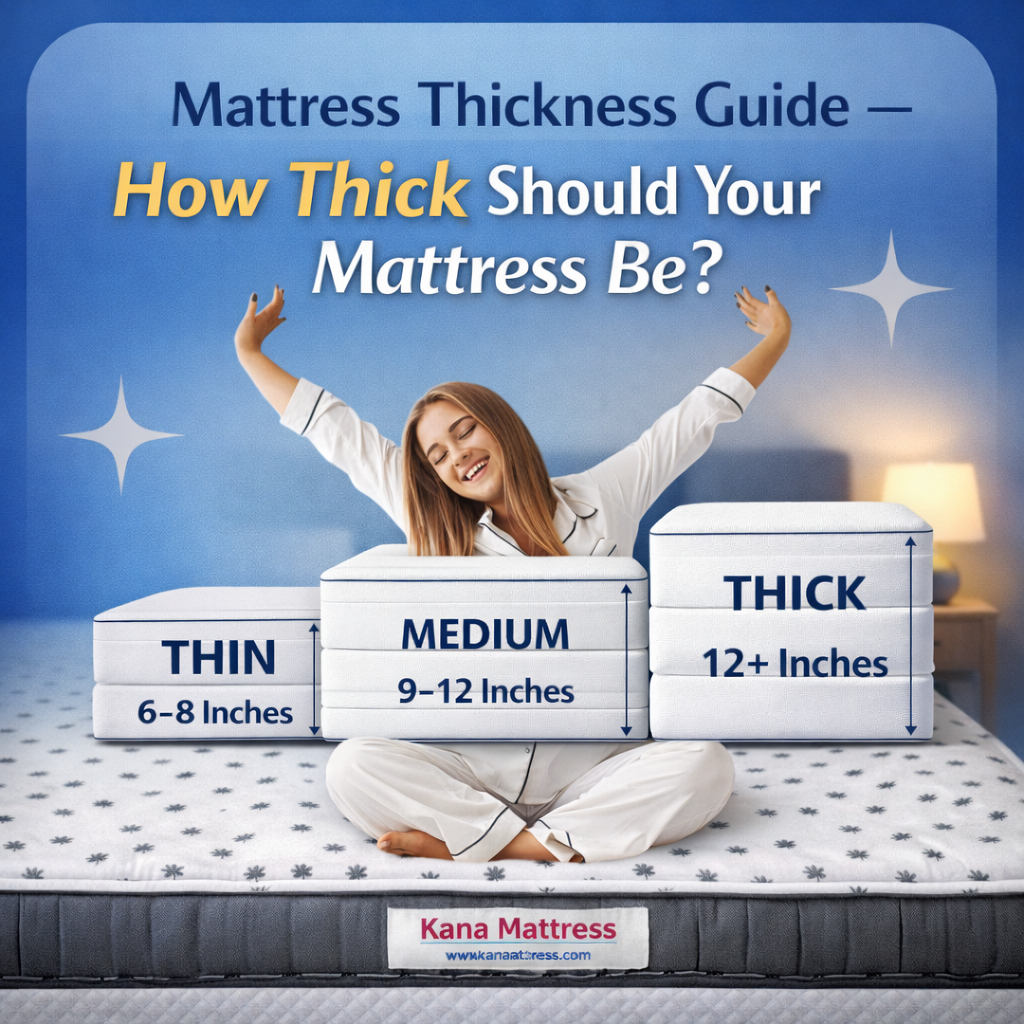
When choosing a mattress, most buyers focus on material, firmness, or price. While these factors are important, mattress thickness plays a crucial role in determining overall comfort, support, and sleep quality. The right mattress height helps maintain proper spinal alignment, reduces pressure points, and ensures long-lasting durability.
At Kana Mattress, we believe that understanding mattress thickness is essential for making the right sleep choice. This guide explains standard mattress thickness levels, factors to consider, and how to choose the ideal height based on your body weight and sleeping style.
Standard Mattress Thickness and Heights
Mattresses are available in different thickness levels to suit various comfort needs. Below is a general guide to standard mattress thickness:
| Mattress Type | Thickness | Suitable For |
| Thin | 6–8 inches | Guest rooms, kids, minimalists |
| Medium | 9–12 inches | Most adults, couples |
| Thick | 12+ inches | Luxury comfort, heavy sleepers |
Each category serves a specific purpose, and the best choice depends on how much support your body requires.
Why Mattress Thickness Matters

Mattress thickness directly impacts how your body is supported during sleep. A mattress that is too thin may cause your spine to bend unnaturally, leading to back pain and stiffness. On the other hand, a well-designed mattress with the right thickness provides balanced support and comfort.
The right thickness helps:
- Keep the spine in a neutral position
- Reduce pressure on shoulders, hips, and joints
- Improve comfort for different sleeping positions
- Prevent sagging over time
- Enhance mattress lifespan
Choosing the correct mattress thickness can significantly improve sleep quality and how refreshed you feel in the morning.
Factors to Consider When Choosing Mattress Thickness
1. Body Weight
Body weight plays a major role in determining the right mattress thickness.
- Heavier individuals require thicker mattresses to provide adequate support and prevent excessive sinking.
- Lighter individuals can choose thinner or medium mattresses without compromising comfort.
Thicker mattresses contain stronger support layers, making them more suitable for higher weight ranges.
- Sleeping Position
Your sleeping position affects how pressure is distributed across the mattress.
- Side sleepers benefit from medium to thick mattresses that cushion pressure points like hips and shoulders.
- Back sleepers need medium-thick mattresses for balanced spine alignment.
- Stomach sleepers should opt for firmer, thinner mattresses to avoid lower-back strain.
Selecting the right thickness ensures proper posture throughout the night.
3. Health Considerations
People with health concerns should pay extra attention to mattress thickness.
- Those with back pain often benefit from thicker mattresses with proper orthopedic support.
- Conditions like arthritis or joint pain may require plush, thick mattresses that provide better pressure relief.
The right mattress height can reduce discomfort and improve sleep consistency.
4. Bed Frame Compatibility
Your bed frame should support the mattress thickness you choose.
- Platform beds work well with thin to medium mattresses.
- Box spring and storage beds can support thicker mattresses comfortably.
- Low bed frames pair better with slimmer mattress profiles.
Always consider the final bed height for ease of use.
5. Budget
Thicker mattresses generally cost more because they use additional materials and layers. However, investing in the right thickness helps avoid frequent replacements and improves long-term comfort. Kana Mattress offers options across thickness ranges to suit different budgets.
Mattress Thickness According to Body Weight
Here is a general guide to choosing mattress thickness based on body weight:
| Weight Category | Recommended Thickness |
| Below 60 kg | 6–8 inches |
| 60–100 kg | 9–12 inches |
| Above 100 kg | 12+ inches |
This ensures proper weight distribution and prevents premature sagging.
Sleep Positions and Mattress Height Preferences
- Side Sleepers: Require softer and thicker mattresses (10–14 inches) to cushion pressure points.
- Back Sleepers: Benefit from medium-thick mattresses (9–12 inches) for balanced support.
- Stomach Sleepers: Prefer firmer, thinner mattresses (6–10 inches) to maintain spinal alignment.
Matching mattress height to sleep position improves comfort and posture.
Common Mattress Thickness Categories
Thin Mattresses (6–8 inches)
Ideal for kids’ rooms, bunk beds, guest rooms, and temporary use. They are lightweight and affordable but may not provide enough support for long-term adult use.
Medium-Thick Mattresses (9–12 inches)
Perfect for everyday use, couples, and combination sleepers. This is the most popular thickness range as it balances comfort and support effectively.
Thick Mattresses (12+ inches)
Best for luxury comfort seekers, heavy sleepers, and people with back pain. These mattresses feature multiple layers for enhanced pressure relief and durability.
Final Thoughts
Choosing the right mattress thickness is essential for long-term comfort, support, and healthy sleep. The ideal thickness depends on your body weight, sleeping position, health needs, bed frame, and budget.
At Kana Mattress, we design mattresses in multiple thickness levels to meet different comfort requirements. When you choose the right height, you invest in better sleep quality and better mornings.
The right mattress thickness makes all the difference.
Frequently Asked Questions (FAQ)
- What is the standard mattress thickness for adults?
A standard mattress thickness for adults typically ranges between 9 and 12 inches, offering balanced comfort and support. - Is a thicker mattress always better?
Not necessarily. A thicker mattress offers more cushioning, but the best choice depends on your body weight, sleeping position, and firmness preference. - Which mattress thickness is best for back pain?
Most people with back pain prefer medium to thick mattresses (10–14 inches) with proper orthopedic support. - Does mattress thickness affect durability?
Yes. Thicker mattresses usually last longer because they contain more support layers that resist sagging. - Can thin mattresses be used daily?
Thin mattresses can be used daily for lightweight sleepers, but they are generally better suited for kids or occasional use.
Recent Posts
-

Avoid These Pillow Mistakes: Learn How to Perfect the Neck Pain Pillow Position
Neck pain is one of the most common reasons people…
-

How Long Can We Use the Ilavam Panju (Kapok) Pillow?
Good sleep is important for a healthy body and mind.…
-

How to Choose the Right Orthopedic Pillow for Back Pain Relief
We often hear the saying, “carrying the weight of the…
-
Mattress Thickness Guide – How Thick Should Your Mattress Be?
When choosing a mattress, most buyers focus on material, firmness,…
-

The Relationship Between Sleep and Weight Loss: Why Good Sleep Matters
When people think about weight loss, they usually focus on…
-

Men vs. Women: Do Our Bodies Recover from Stress Differently?
Stress has become a normal part of daily life, whether…
-
How to Maintain Your Mattress for Long-Lasting Comfort?
A good night’s sleep depends on more than just your…
-
Morning Headaches? Your Pillow Might Be the Real Reason
Have you ever woken up with a headache and wondered…
-
What Happens When You Sleep on an Orthopedic Pillow for 30 Days?
A good night’s sleep is one of the most important…
-

How to Sleep on an Orthopedic Pillow for Better Spinal Health
Good sleep is more than just closing your eyes, it’s…
-

The Top 5 Natural & Organic Orthopedic Mattresses
Sleep these days is not anymore just rest—it's wellness, lifestyle,…
-

Signs You Need a New Mattress: Why a Kana Kapok Cotton Mattress is Your Best Choice
Do you wake up feeling more tired than when you…